Design Sprint
Facilitating an Ideation Workshop for a Complex FinTech Product
In 2019, Integrated Financial Settlements (IFS) brought me on board for a short term contract role. My goal was to help them revamp their main internal software.
Their business is structured settlements, so the software is used by their settlement consultants to prepare and compare different combinations of timelines and financial vehicles in order to develop a quote for the best structure for the claimant. Their legacy product was a piece of desktop Windows software that had been built in the 90s and was still in use. IFS wanted to upgrade their product to a modern web experience, and while they were at it, re-think a lot of how the software operated.
Date
2019
Company
IFS
Industry
Financial Settlements
My Contributions
UX Design
Design Sprint Leader
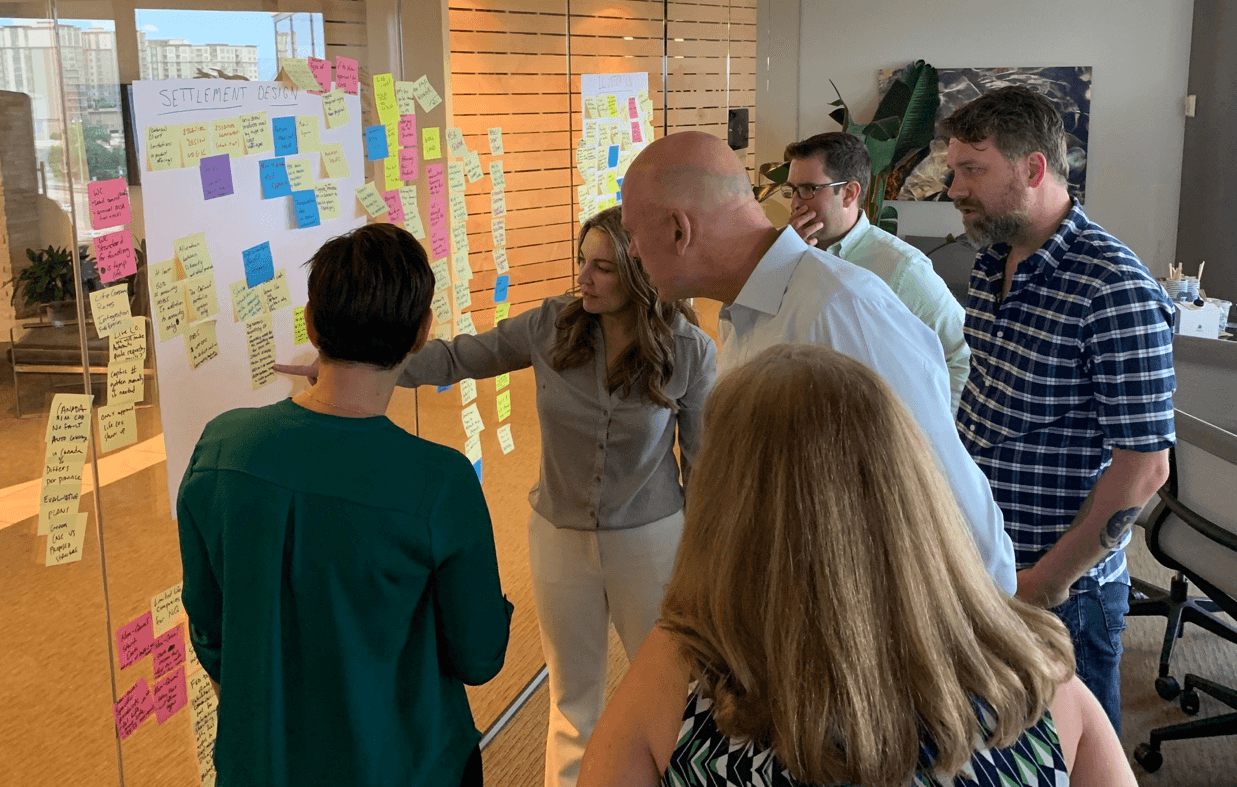
For the design sprint workshop, IFS brought in around a dozen of their settlement consultants from around the country. These participants were all highly knowledgeable about the current software and the complex financial situations the new version would have to handle. The complexity of the situations they dealt with in their work plus the highly regulated nature of their industry made it essential to get their input about the direction of the new software. The workshop was four days long, and facilitated by myself and an in-house designer at IFS.
Day 1: Understand the Problem
This day was dedicated to building a group understanding of the problem we’d be solving over the next few days. Through discussing a series of problem statements focused on different jobs to be done (e.g. “As a settlement consultant, I need to complete an assessment of the client’s needs.”) the group was able to share knowledge across each of their specific domains. I facilitated this discussion and had the participants capture ideas on post-it notes then work together to organize them thematically. When we were done, we had a ton of great ideas stuck up on the wall and sorted into key focus areas.
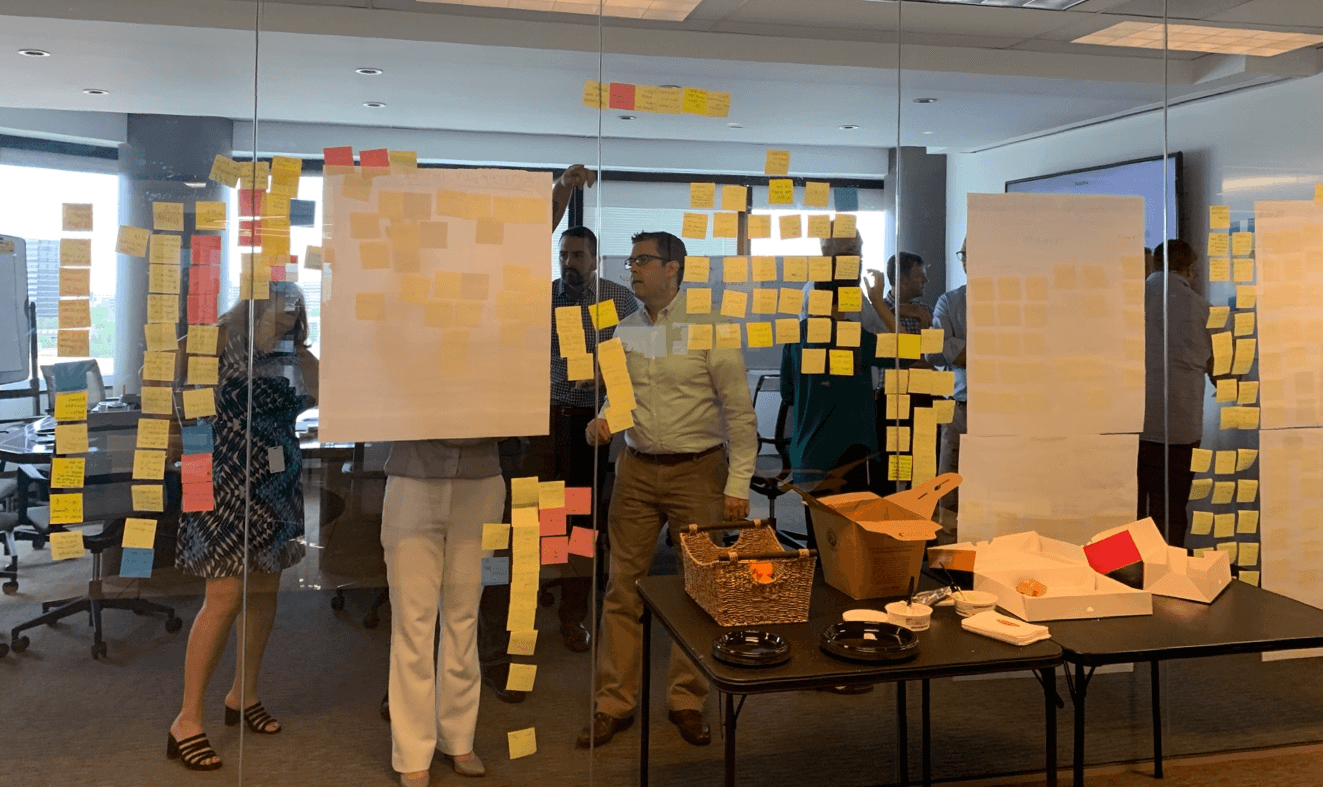
During the discussions, everyone got involved by capturing ideas on post-it notes and then collaboratively sorting them into categories. Note the table of breakfast food – we nominated one of the participants to be in charge of all the food ordering. It was important to keep everyone's energy up during the four-day intensive sprint.
Day 2: Sketch Solutions
After aligning on the problem space, it was time to start brainstorming solutions. I showed the group some examples of what other financial software products look like as inspiration, then demonstrated how easy it is to create a UI sketch with pencil and paper. We did a warm-up exercise called Crazy-8s, where each person sketches eight variations of an idea in eight minutes. This got everyone in the right headspace to generate multiple potential solutions without getting too committed to any one idea. Then the group got to work sketching their UI ideas.
Day 3: Decide and Prototype
We began the day by hanging up everyone’s sketches. Silently, everyone examined the ideas and used sticky notes to vote on the ones they thought were most promising. We then used a speed critique format to present the potential solutions shown in the most popular sketches. This facilitated critique ensured that we stayed high-level and didn’t get too bogged down in the details. After the critique, everyone voted for one idea they thought was best and made a brief statement about why. The Product Owner got to make the final call on which ideas the UX team should prototype. Two SMEs helped create realistic financial situations for the UX team to use as examples in our prototypes, and we got to work.
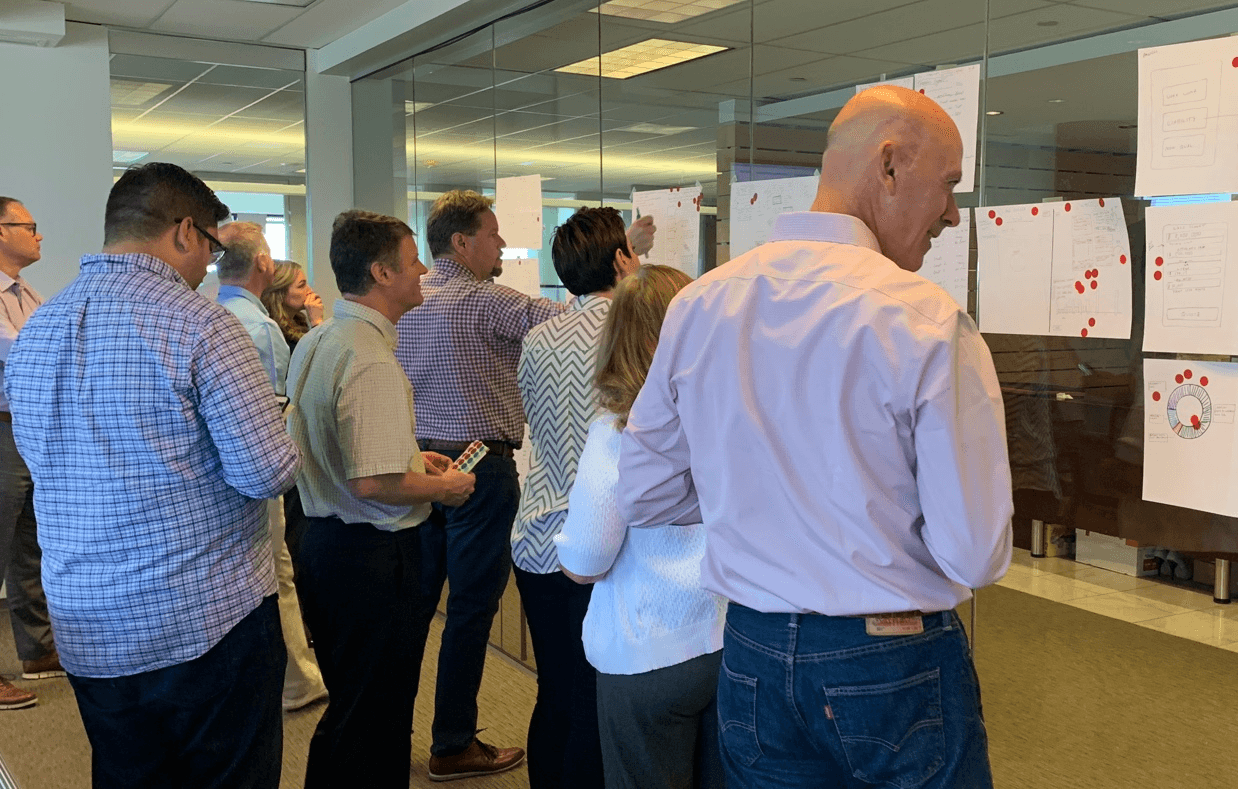
Participants from non-design backgrounds were empowered to create their own UI sketches and decide on the best ideas with a dot voting system.
Day 4: Feedback & Testing
On the final day, the UX team validated what we had built. We began by showing the participants a walkthrough of our new prototype to get their feedback. After making some adjustments based on their feedback, the UX team spent the afternoon running remote usability tests with users of the current software. The feedback from these sessions, plus additional details captured during the workshop, helped to guide the direction of the new software product as I continued to flesh out the design over the following weeks.
Outcome:
The design sprint process allowed us to quickly create wireframes informed by essential subject matter expert insights. After usability testing, we had a clear path to replace the legacy system with a more modern, user-centered approach. We ran a survey of the sprint participants afterwards, and they really enjoyed the workshop process. It helped them to feel like they had a voice in the development of the tool they’d be using in their work.
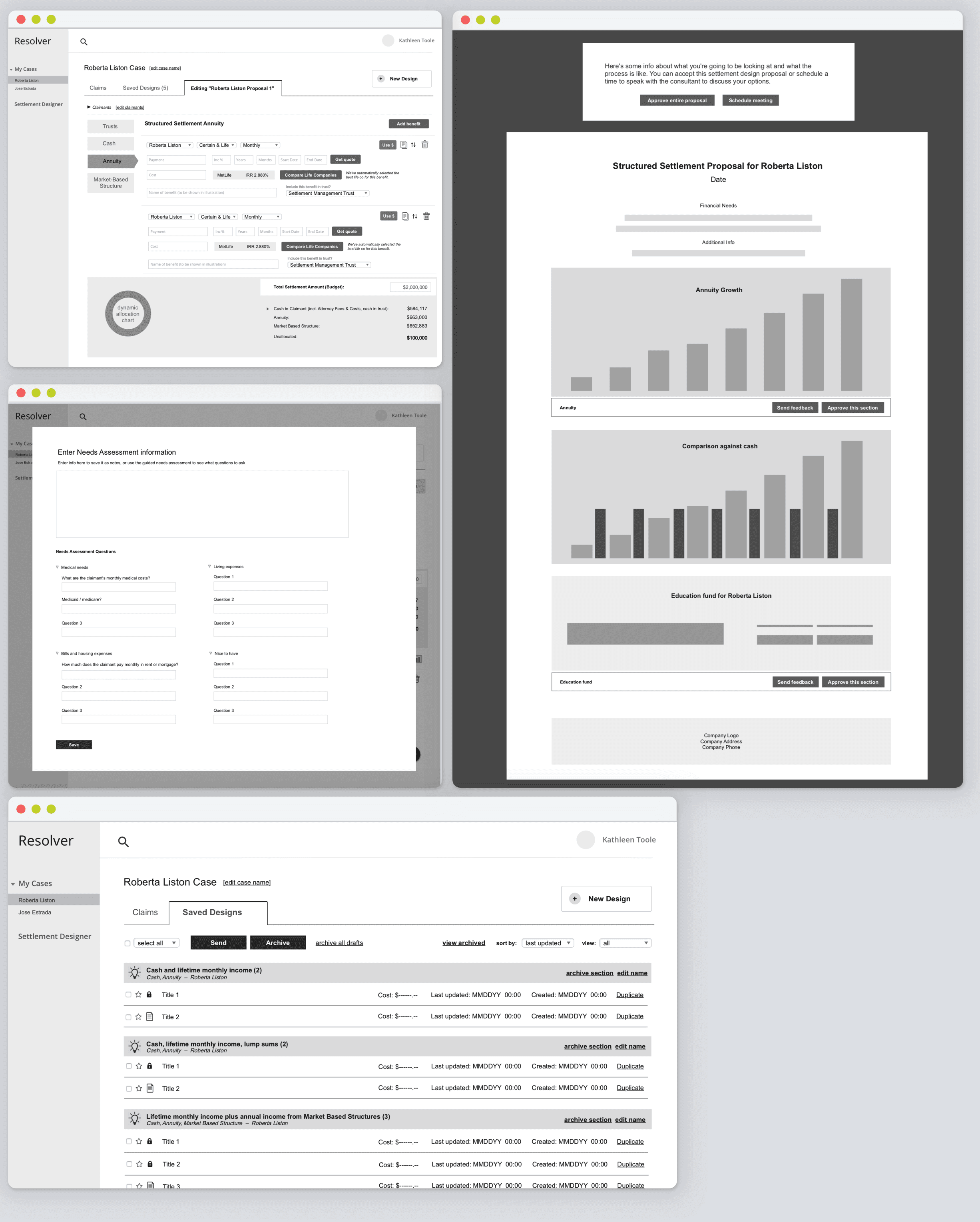
I created wireframes using insights from the subject matter experts who took part in the design sprint.